
Reviewed · PODGORICA TOURS
MONASTERY TOUR – Impressive Montenegrin Monasteries
This tour is interesting because it links faith to real geography, a cross-shaped cave monastery in the morning and Ostrog, carved into steep rock, way up at 900 m. You get a full day of sacred sites without it feeling like a rushed checklist.
I love the way the best guides on this route explain what you’re seeing, with stories that connect Christianity in Montenegro to local culture and history. I also like the private setup, with pickup options that can be as flexible as departing from Podgorica, or starting from Kotor or Budva, plus an air-conditioned vehicle for the ride between sites.
One consideration: Ostrog can be crowded, so your experience will depend a lot on timing and how patient you feel in big pilgrimage areas. Also, the day needs good weather, since the tour can be rescheduled if conditions are poor.
Key highlights worth planning around
- Dajbabe Monastery’s cave cross: a monastery shaped by rock and faith, with an hour that moves at a comfortable pace
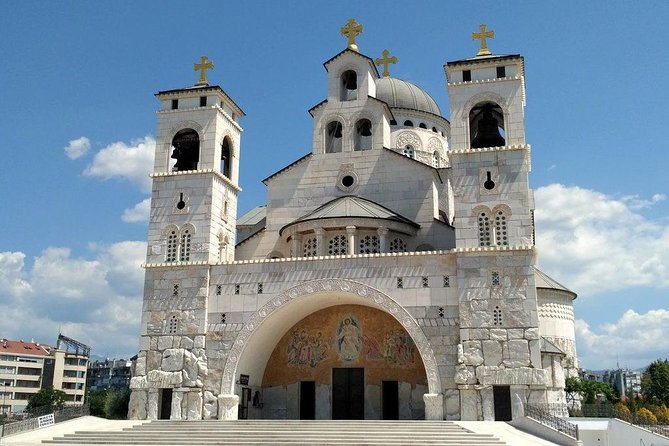
- Saborni Hram Hristovog Vaskrsenja: a modern Podgorica landmark with a 20-year build and techniques not used for 8 centuries
- Ždrebaonik Monastery in Danilovgrad: a women’s convent that has rebuilt itself again and again after wars
- Ostrog Monastery at 900 m: one of the most visited pilgrimage places in the Balkans, famous for healing stories
- English-speaking, private guiding: your group stays together, and the day is tailored to you more than in typical group tours
A one-day monastery route that feels like culture, not just sightseeing
This is a 7-hour monastery day built around four major stops near Podgorica and Danilovgrad, with Ostrog as the emotional peak. The structure is smart for first-time visitors: you start closer to Podgorica with the more “hidden” and architectural sites, then you end at Ostrog where the vibe shifts from quiet reverence to pilgrimage energy.
It’s also practical. You get hotel pickup wherever you prefer, and you travel in an air-conditioned vehicle. The tour is private, meaning only your group participates, which matters if you want the guide to slow down when something clicks for you, or speed up when you’re eager to keep moving.
Timing helps too. Dajbabe is about an hour, Saborni Hram is shorter at around 45 minutes, then you move on to Ždrebaonik for about an hour before finishing at Ostrog for roughly an hour and 40 minutes. That last block is important because Ostrog draws serious foot traffic.
As for price, $132.53 per person is a fair number for a private day when you factor in two things that are often the hidden costs: transport and handled fees. Admission is free at the listed sites, so your money mostly supports guiding and getting you between locations comfortably.
A few more Podgorica runs worth a look
- Skadar Lake National Park Guided Boat Tour with Wooden Boat
★ 5.0 · 91 reviews - Best from our coast (Kotor bay, Budva, Sv Stefan, Skadar lake)
★ 5.0 · 79 reviews - GREAT MONTENEGRO TOUR Cetinje – Njeguši – Kotor – Budva – Bečići – Saint Stefan
★ 5.0 · 69 reviews
Dajbabe Monastery in a cave, where the cross is carved in rock
Dajbabe Monastery is the kind of place that makes you stop talking for a second. It’s an adapted cave monastery, made in the rocks in the shape of a cross. The setting matters here, because it’s not just a building, it’s the rock itself doing part of the work.
You’ll spend about an hour. That’s long enough to see the space slowly, read what’s available on site, and get your bearings without feeling like you’re being hurried out the door. It’s also a good starting point because it sets the theme of the whole day, how faith here is tied to geography and materials.
A couple practical tips for this stop:
- Wear closed-toe shoes with decent grip, since cave-adapted areas can be uneven or slick.
- Bring a layer. Even on sunny days, caves can feel cooler than the street.
Admisson is listed as free, which makes Dajbabe an easy win. You don’t have to decide if the entry cost is worth it. Your only job is to show up curious.
Podgorica’s Saborni Hram, where modern architecture carries ancient symbolism
After the cave, you shift to a completely different kind of sacred space at Saborni Hram Hristovog Vaskrsenja, the Gathering Church of Christ’s Resurrection. This is the Podgorica site that helps you understand the “old and new” symbol connection the tour highlights.
The time here is about 45 minutes, and it’s built for focused looking. This church is described as unique in its monument and architecture, and the construction story is a big part of its appeal. It took 20 years to finish completely, using techniques that had not been in use for 8 centuries. Even if architecture isn’t usually your thing, that kind of time and craft tends to make you see details you’d otherwise ignore.
What I like about this stop for your experience is the contrast. After Dajbabe, you’re not just learning a new place. You’re learning a different approach to sacred design, stone, form, and meaning.
Practical notes:
- Keep an eye on how you move inside. Churches often have their own rhythms, and the guide will usually help you avoid getting in the way.
- If you’re the type who enjoys photos, this is one of the better moments to take a few, but don’t forget to also just look.
Admission is free here too, which keeps the day feeling light on logistics and heavy on meaning.
Ždrebaonik Monastery in Danilovgrad, the women’s monastery that kept coming back
Then you head to Danilovgrad for Ždrebaonik Monastery, a convent described as a hero among monasteries because it was burned and demolished in every war that affected this area, yet it still stands and remains beautiful. That sentence alone tells you why this stop hits.
You’ll have about an hour here. It’s a women’s monastery, and the day’s angle is clear: you’re not only visiting a church, you’re seeing how religious life continues. The site includes a library, dormitories, and a working space where the nuns make icons and souvenirs.
This is one of those stops where the value is less about ticking a landmark box and more about understanding daily spiritual craft. When you see the icon-making work and the monastic rooms, you can picture the monastery as a living institution, not a museum.
A balanced expectation check:
- This is likely calmer than the big pilgrimage sites, so it can feel more intimate.
- If you’re sensitive to emotion or history of conflict, the backstory may make the visit heavier. For many people, that’s exactly what makes it worthwhile.
Admisson is also listed as free. That means your time is the real cost, and you get a lot of it relative to most stop durations.
Something slower, once Podgorica is settled:
- Skadar Lake National Park: Guided Boat Tour to Kom Monastery
★ 4.5 · 49 reviews - Durmitor – Black Lake & Tara River Canyon – North Montenegro tour
★ 5.0 · 41 reviews - Private transfers from Podgorica Airport and city to Budva
★ 5.0 · 41 reviews - Podgorica Historic, Safari and Winery tour – Skadar lake and River Crnojevica
★ 4.5 · 39 reviews
Ostrog Monastery at 900 m, miracles talk meets pilgrimage crowd reality
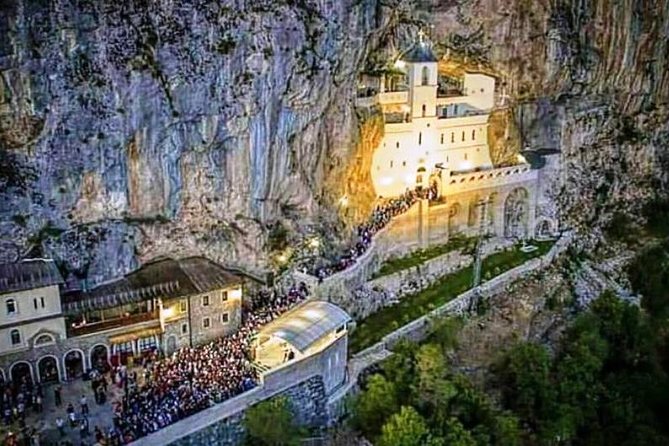
Ostrog is the grand finale, and it’s easy to see why. The monastery is carved into steep rock and sits about 900 m above sea level. It’s often called one of the most visited pilgrimage places in the Balkans, and the way people talk about it is unmistakable: it’s believed to be a place where miracles happen, tied to healing and spiritual change.
You’ll spend around 1 hour and 40 minutes here. That’s enough time to take in the cliffside setting, feel the scale of the pilgrimage, and still have moments to step back and observe rather than just shuffle forward.
Where Ostrog can get tricky is right in the name: crowds. One of the clearest cautions from the experience of others is that Ostrog can be busy. If you hate crowd motion, plan to focus on small windows of calm, not the general flow.
My practical advice to make Ostrog work:
- Go slow at first. Let your eyes adjust to the height and rock setting before you decide where you want to spend your time.
- Be ready for a steady stream of people. If you’re stuck trying to get the perfect photo, you’ll waste time and miss the best feeling of the place.
- Bring water and something light to snack on. Your energy matters at altitude and in big crowds, and the tour timing is tight enough that you might not want to hunt for food.
Admission is free here too, which is great. You get the full pilgrimage experience without paying an extra gate fee at the emotional peak of the day.
How pickup, private guiding, and English explanations make the day easier
This tour’s biggest advantage is not just where you go, it’s how you get there and how the day is managed.
You can be picked up wherever you prefer. That single detail often saves you from the stress of public transit timing, taxi coordination, and that awkward question of where to meet after each stop. You’ll also ride in an air-conditioned vehicle, a big deal in Montenegro heat.
Language is another real value point. It’s offered in English. And in the past experiences connected to this route, guides such as Ivan and Tamara stand out for passionate, careful explanations. People describe them as not rushing, and as professionals who manage the day with a steady rhythm. Other guides named include Moawyah, Lidia, and Darko, with praise for friendliness, attentiveness, and driving skill.
One detail I think you’ll appreciate, especially if you prefer a human pace: some guides actively adjust so you can keep enjoying the day. There’s an example of help for a guest with knee issues, plus organizing breaks and handling barriers gently. That kind of flexibility can turn a sightseeing day into something that feels more like traveling with a competent local friend.
If you’re picky about smooth communication, note this: at least one booking flagged messy pre-tour communication before pickup. The good news is that pickup still happened as expected once the day started. My suggestion: confirm your pickup time close to departure and keep your phone ready.
What it costs, and why the value is better than it looks on paper
At $132.53 per person for about 7 hours, this isn’t the cheapest outing on the coast. But it can be good value because:
- You’re paying for a private day, not a seat in a big group.
- Admission is free at the listed stops.
- Air-conditioned transport and all fees and taxes are included.
- The guide time covers four religious and cultural sites in one plan.
If you’re traveling with a partner, two friends, or a small family, private usually means you’re not paying just for entry fees. You’re paying for someone to connect the dots. That is exactly what guides on this route are praised for: explaining not only what you’re looking at, but why it matters in Montenegro.
One more value angle: the tour is weather-dependent. That’s not fun, but it often prevents you from showing up in miserable conditions and wasting your time. When the day works, you get a full, comfortable loop.
Respect, comfort, and timing tips for each monastery stop
Even without getting fancy, you’ll have a better day if you plan for what monasteries tend to require in practice.
- Dress simply. Consider bringing something that covers shoulders and knees, especially for church interiors.
- Expect quiet moments. Let the guide set the pace. You don’t need to whisper to everyone, but you also don’t want to act like you’re at a concert.
- Be flexible with photos. If people are moving through sacred areas, step aside and let flow take priority.
- For Ostrog in particular, mentally prepare for crowds. Your goal is not to beat the crowd. Your goal is to enjoy the setting and the experience inside your time window.
Comfort matters too. You’ll be on your feet, moving between places, and spending time looking up, especially at Ostrog. Good shoes and a small day bag can make this feel like a day trip, not a chore.
Who should book this monastery day trip from Podgorica, Kotor, or Budva
This is a strong choice if you fall into any of these categories:
- You’re in Montenegro for a short time and want multiple monastery highlights without planning routes.
- You like religion, architecture, and culture, not just scenery.
- You prefer private guiding so questions can happen naturally.
- You want an English-speaking guide who can explain history and symbolism in a straightforward way.
It also works well for people who appreciate practical care during the day. The route has a mix of stops with different vibes, and the guide’s job is to keep you comfortable while still giving you time to see what matters.
If you hate crowds, you should think twice about Ostrog, because it’s the main magnet of the whole day. The rest of the sites are generally calmer, but Ostrog is where the foot traffic shows up.
Should you book this Montenegro monastery tour?
I’d book it if your priority is a structured, private day that hits Dajbabe, Podgorica’s Resurrection Cathedral, Ždrebaonik, and then Ostrog, all with free admissions and included transport. The value is strongest when you want more than a driver, when you want someone to explain what you’re seeing and keep the day paced.
I would hesitate if you know you struggle with crowds, or you’re traveling at a time when weather is unreliable. Ostrog can be busy, and this experience depends on good conditions to run smoothly.
If you’re flexible, though, this is the kind of day that sticks. Cave to cathedral to a convent that endured wars, then cliffside pilgrimage at 900 m. It’s one of the most direct ways to understand how Montenegro’s faith shows up in stone, ritual, and people.
FAQ
How long is the monastery tour?
It lasts about 7 hours.
How much does the tour cost per person?
The price is $132.53 per person.
Where does the tour start, and is pickup included?
You can be picked up wherever you prefer, and pickup is offered.
Can I depart from places other than Podgorica?
Yes, there is an option for departure from Kotor or Budva.
Is this tour private?
Yes. It is a private tour/activity, and only your group participates.
What language is the tour offered in?
The tour is offered in English.
Are admission tickets included?
Admission tickets are listed as free at each of the tour stops.
What is included in the price?
The tour includes an air-conditioned vehicle and all fees and taxes.
Does the tour provide a mobile ticket?
Yes, a mobile ticket is offered.
What happens if the weather is poor?
This experience requires good weather. If it is canceled due to poor weather, you will be offered a different date or a full refund.
Is free cancellation available?
Yes, free cancellation is available up to 24 hours in advance for a full refund. If you cancel less than 24 hours before the start time, the amount paid is not refunded.
Newest reviews from Podgorica
- Podgorica: Biogradska Gora, Moraca and Kolasin Day Tour★ 5.0 · 3 reviews
- From Virpazar: Visit Karuč, the hidden pearl of Lake Skadar★ 5.0 · 3 reviews
- Podgorica by E-Bike: Culture, Hidden gems & Rivers★ 5.0 · 3 reviews
- Book Your Tour Ostrog Monastery★ 3.5 · 3 reviews
- Skadar Lake National Park: Private Guided Tour to Kom Monastery★ 5.0 · 3 reviews
- Podgorica Car Trip, Doclea city, Wine tasting, Niagara falls★ 5.0 · 3 reviews
- NORTH TOUR Np Biograd Gora-Lake-Moraca Canyon & Monastery-Kolasin★ 5.0 · 3 reviews
- Private Montenegro Tour – Cetinje, Kotor & Budva visit★ 4.5 · 3 reviews
Podgorica Tours, compared.
Skadar Lake National Park Guided Boat Tour with Wooden Boat
Read our review →
Best from our coast (Kotor bay, Budva, Sv Stefan, Skadar lake)
Read our review →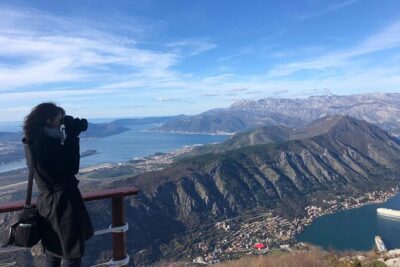
GREAT MONTENEGRO TOUR Cetinje – Njeguši – Kotor – Budva – Bečići – Saint Stefan
Read our review →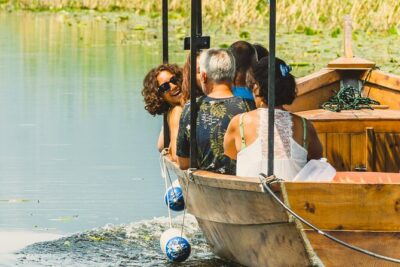
Skadar Lake National Park: Guided Boat Tour to Kom Monastery
Read our review →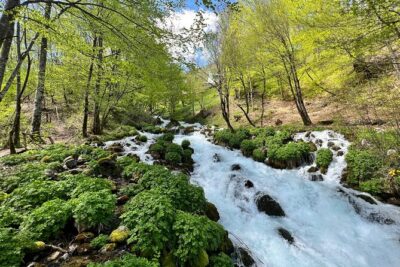
Durmitor – Black Lake & Tara River Canyon – North Montenegro tour
Read our review →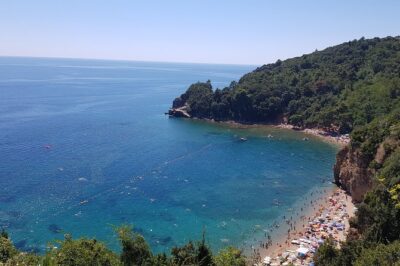
Private transfers from Podgorica Airport and city to Budva
Read our review →
Podgorica Historic, Safari and Winery tour – Skadar lake and River Crnojevica
Read our review →
Private Full-Day Tour in Moraca and Tara Canyons, Durmitor & Biogradska Gora NP
Read our review →Browse the lists this tour appears in