Reviewed · GUIDED
Self Guided Stroll Through Old Town of Kotor
Kotor’s Old Town is one of those places where the streets feel like a story you can walk through, and this self-guided route is built to help you do that at your own speed. You start at Sea Gate, follow a line of key landmarks, and finish near Gurdic Gate, with the option to climb up toward the fortress for big views.
I especially like two things: the tour’s audio and written commentary that you can replay and use offline, and the fact that the walk is organized around recognizable spots like St Tryphon’s Cathedral and local squares, not vague directions. For the price, you are buying time-saving structure and a lot of on-the-ground context.
One drawback to plan around: Kotor’s lanes are winding, and the in-app navigation can be tricky. If the map or stop images do not match what you see in the moment, you may need a little extra patience, plus some extra walking time if you choose the fortress climb.
Key highlights worth your attention
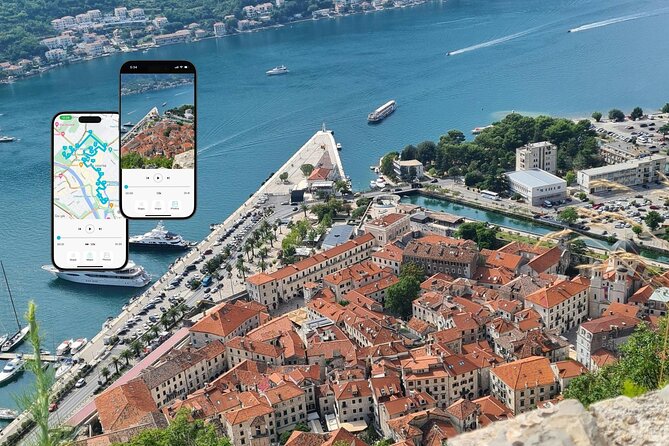
- Sea Gate to Gurdic Gate route that helps you string the Old Town landmarks together without guessing
- Offline audio access once downloaded, so you can keep going even when signal disappears
- Cat-themed stop that turns a quirky theme into a real walking reason to slow down
- UNESCO Old Town setting with quick explanations tied to what you are looking at
- Optional St John fortress trek for panoramic views, but it needs water and solid footing
Sea Gate to Gurdic Gate: a first-time Kotor plan that actually works
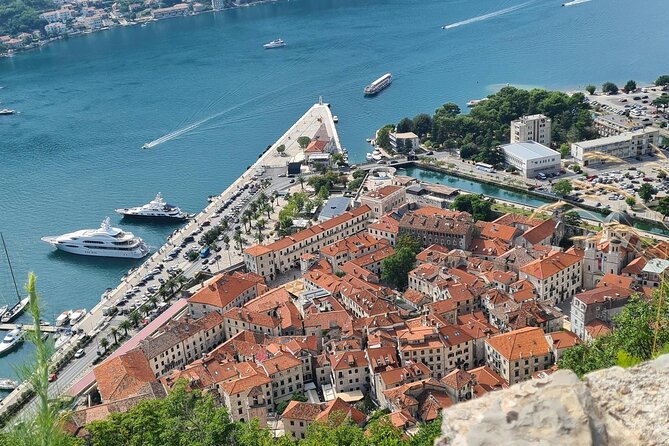
If you are new to Kotor, the biggest challenge is not finding the Old Town. It is figuring out what order to see things in, so you do not spend your energy wandering in circles. This route is designed like a sensible backbone walk. You begin at Sea Gate, then move landmark to landmark, and you end as you reach Gurdic Gate.
What makes that helpful is pacing. You can do the full walk as a smooth 1 to 2 hour loop, taking the stops as quick breaks, or you can slow down and turn a couple of them into longer moments. Kotor rewards that style of travel. The streets feel narrow and layered, and the best way to enjoy them is to keep your route moving while leaving room for detours.
The walk also fits Kotor’s rhythm. The Old Town is compact, but it is not “grid simple.” You will feel the steepness and turns even on a relatively short path. Having a plan that tells you where to look next helps you avoid the mental tax of constant decision-making.
Finally, the ending matters. Ending near Gurdic Gate keeps you from getting stuck at the “wrong end” of the Old Town when you still want a view or an evening meal somewhere else.
Other days out of Kotor that get compared with this one:
- Kotor: Swim in the Blue Cave + Lady of the Rocks Tour
★ 4.7 · 3,462 reviews - Kotor: Blue Cave, Submarine Base and Lady of the Rocks Tour
★ 4.9 · 2,869 reviews - Kotor: Blue Cave Swim Stop, Lady of the Rocks & Submarine Base
★ 5.0 · 1,914 reviews
Price and value: why $6.98 can be a smart buy
At $6.98 per person, you are not paying for a guide’s schedule. You are paying for a guided route experience: audio plus a written guide, with images to help you match what you see on the street. That can be a great value when you want to understand what you are looking at without paying for a private human-led tour.
Here is why I think the value works, especially in Kotor:
- You get a ready-to-go narrative for a walk that is easy to stretch from 1 to 2 hours.
- You can use it repeatedly for a long window, since the access lasts 1 year on iOS and Android.
- You can download the tour and keep it going offline, which matters in older towns where signal can be unpredictable.
The tradeoff is simple: you are responsible for navigation. If you prefer a human guide who can instantly correct your direction, this will feel less forgiving. If you are comfortable reading a map, taking a second to confirm landmarks, and walking with a little curiosity, the low price becomes a big advantage.
Also, this is private in the sense that it is just your group. That means no waiting around for others, no group compression, and no awkward pauses while someone asks a question the guide has already answered.
Phone setup and what to bring (so you do not lose time)
This experience is built for your phone. You will get tour access instructions by email from Tourific, and once you have the tour downloaded, you can use it offline. There is also a mobile ticket, so you are not juggling paper.
What you need to bring:
- A charged phone with the tour downloaded
- Enough battery for the walk plus any fortress detour
- No headphones are included, and no physical device is provided, so you will likely use your phone’s audio through earbuds you bring or speaker, depending on your preference
What the tour provides that makes the experience smoother:
- Audio and written guide that you can listen to as you walk
- Images to help you identify stops
- An interactive map for navigation
- Offline access after download
My practical tip: before you start walking, take 2 minutes to confirm the tour is fully downloaded and the audio is loading. Kotor’s streets encourage quick starts and quick stops, and it is annoying to troubleshoot mid-street.
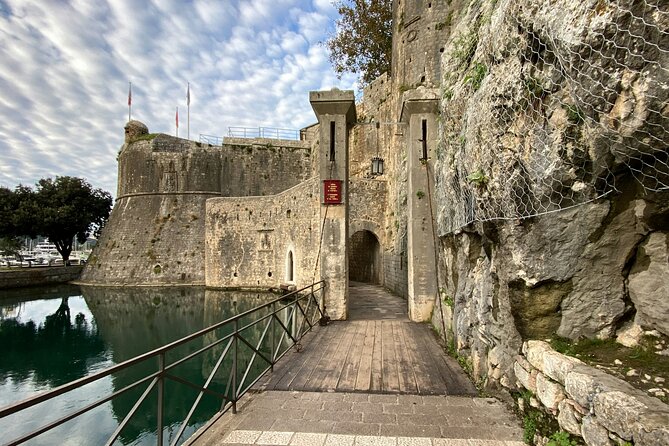
Stop 1, Sea Gate: symbols, meaning, and a fast way to get oriented
Sea Gate is a strong place to start because it anchors you. It is the kind of landmark where you naturally begin to look up and around, and that is when the narrative helps.
At this first stop, the tour focuses on the symbols on Sea Gate and what they represent. That is a clever way to begin, because it turns a dramatic city entrance into context instead of just scenery.
One practical note: at the start of any self-guided walk in a medieval walled town, you want your directions to be crystal clear. If the route does not match your mental picture of the streets immediately, do not panic. Just re-check your position and let the next major landmark pull you forward.
A few more Kotor runs worth a look
- From Dubrovnik: Montenegro Day Trip with Boat Cruise
★ 4.6 · 1,331 reviews - From Kotor: Boat to Blue Cave & Lady of the Rocks &Submarine Base
★ 5.0 · 1,104 reviews - Kotor: Fast-Track Venetian Perast & Our Lady Of The Rocks
★ 4.7 · 1,009 reviews - Kotor: Blue Cave & Our Lady of The Rocks & Submarine Base
★ 4.9 · 936 reviews
Stop 2, Piazza of the Arms: leaning tower lore and naming clues
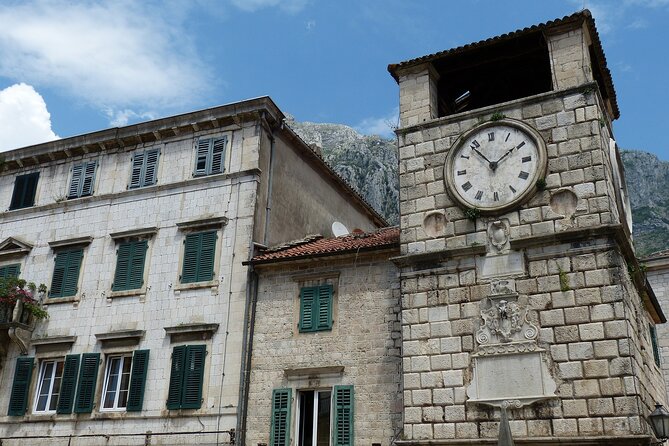
From Sea Gate, you move to the Piazza of the Arms, and this stop is about interpretation. The tour nudges you to pay attention to the leaning tower and to learn how the square got its name.
What I like about stops like this is that they teach you how to look. Instead of only describing history, the commentary ties a story to something you can literally see in front of you. That keeps the walk from becoming background noise.
Also, squares in Old Towns can be useful navigation anchors. When streets start to twist, having a place like Piazza of the Arms where you can re-orient yourself is a small but real advantage.
The cat theme stop: why Kotor is a city of cats
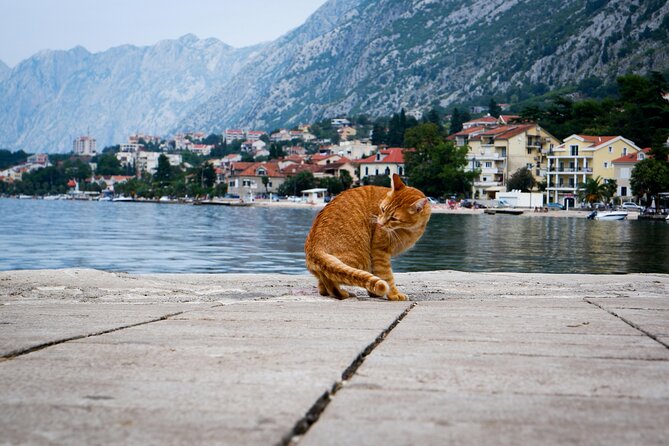
Then you hit the part that turns a walking tour into a grin: the tour explains why Kotor is known as a city of cats. You are also directed toward the idea of a museum dedicated to them, which is a fun way to connect what you see on the street with something you can later pursue if you want more.
This works well for a self-guided format because it is memorable. When you hear the cat story while you are walking among real cats and old walls, the information sticks without needing a museum visit on day one.
If you are traveling with kids or you just like odd local details, this is the moment that tends to feel like a break from “traditional tour mode.”
Stop 3, Church of St. Luke: significance you can spot and respect
Next comes the Church of St. Luke, and the key point here is significance. The commentary is built around what makes this church especially important, so you know why you are taking a moment inside or in front of it, rather than treating it like another pretty facade.
Church stops are most satisfying when you pause long enough to read what the building is telling you. A self-guided tour can help because you are not pressured to move on before the story lands. Use that freedom to slow down, even if it is just for a few extra breaths.
In a town like Kotor, religious buildings also help you understand layers of influence. The tour’s bigger theme includes Venetian influence and the town’s resilience after natural calamities. Churches and civic sites are natural places to feel those layers in place.
Stop 4, Karampana Well: a fountain origin story that feels human

At Karampana Well, the tour focuses on the origins of this fountain. That is a good stop choice because wells and fountains are practical history. They tie to daily life, water access, and the way communities organized themselves.
A fountain stop is also a nice pace-break. If you are walking for 60 to 90 minutes, you will eventually want a moment where your senses slow down. This kind of landmark does that naturally, especially when the route has been moving from gate to square to church.
Noble family palaces: houses of power you can walk past
Mid-route, the tour turns to the houses of noble families in Kotor, often referred to as palaces. Even without deep architectural training, you can learn a lot from this stop because it reframes what you are seeing on the facades.
Look at it like this: the Old Town is not only a collection of beautiful buildings. It is also a record of who lived where, how wealth displayed itself, and how power shaped the city.
If you like architecture, you will probably enjoy this stop more. If you do not, the narrative still gives you something concrete to notice, which prevents your eyes from glazing over in yet another alley.
Kotor Old Town finish at Gurdic Gate: squares and St Tryphon’s Cathedral
The tour’s core loop closes as you pass more landmarks and head out of the Old Town at Gurdic Gate. Along the way you are directed through highlights like Boka Navy Square, Flour square, and St Tryphon’s Cathedral.
This is the area where the walk becomes very satisfying visually. St Tryphon’s Cathedral is the kind of landmark you naturally remember, because it is hard to miss. Flour square is the kind of detail that makes a city feel real. It reminds you that trade and daily routines mattered, not just big ceremonies.
Boka Navy Square also helps you connect Kotor to the wider story of the Bay of Kotor region. Even if you only skim the commentary here, you will likely come away with a better sense of why the town’s waterfront matters, even when you are not directly beside it.
Then you exit at Gurdic Gate. That is an underrated part of choosing a route. Exiting at the right time keeps you from backtracking and it helps you match your walk to your next plan, whether that is dinner, a viewpoint, or public transport.
Optional St John fortress trek: great views, real effort, plan for it
After the Old Town loop, the tour offers an optional trek to the St John fortress, with an estimated time of about 1 hour. This is the part where you should be honest about your fitness and your daylight.
A key practical point: the ascent is not just “a little uphill.” If you are doing it, bring water and wear shoes you trust. The guidance also suggests that the path experience can vary, with preference for hiking trails rather than a direct approach through an entrance route.
You also want to think about timing. The Old Town walk can be completed around 1 to 2 hours, but adding the fortress trek can extend your day. If you go too late, the views might not be as rewarding, and you can feel the extra strain of climbing plus returning in low light.
My advice: if you are unsure, do the Old Town first while energy is high, then decide at Gurdic Gate if the fortress pull is worth it for you. That way you avoid committing too early.
Navigation reality check: winding lanes, map mismatches, and how to stay calm
This is the part I would plan for. Kotor’s streets can frustrate precise instructions, even when the route is well thought out. Some people found that the next stop could be hard to find, and that the in-app map guidance and images were sometimes off compared with what they saw nearby.
So what do you do? Here’s how to keep the experience enjoyable if that happens:
- Use the in-app map, but also rely on major landmarks named in the tour like Sea Gate, Piazza of the Arms, Church of St. Luke, St Tryphon’s Cathedral, and Gurdic Gate.
- If you miss a stop, do not keep searching forever in the same side street. Step back, find a bigger landmark, then re-align.
- Give yourself a little buffer. The total duration already accounts for stop time, but not every day walks at the same pace when cobblestones and turns slow you down.
This kind of navigation uncertainty is not a dealbreaker. It is just part of Kotor’s charm, and you get better results when you stay flexible.
Money, small costs, and a practical Kotor tip
One practical note worth taking: you may find that in the city cash is needed more often than card. Plan for that with some small bills or coins, especially if you plan to buy a drink, a snack, or anything from street level shops while you are between landmarks.
Also, if you decide to buy a drink or a snack near major squares, do expect the usual tourist pricing. That does not mean you cannot enjoy it. It just means you should not be surprised if the price is higher closer to the most famous points.
Who this self-guided walk is best for
This experience is a strong match if you:
- Are visiting Kotor for the first time and want a highlights walk without committing to a human guide
- Like structured stops, but still want freedom to linger
- Enjoy quirky local themes, like the city of cats story
- Want offline audio for a walk through a place where signal might be spotty
It is less ideal if you:
- Hate navigation stress or get annoyed quickly by inaccurate directions
- Want a completely seamless, step-by-step experience without any adjustment
- Are not comfortable with an optional climb if you decide to add the St John fortress trek
A good traveler profile here is flexible and curious. You will get the best experience when you treat the tour as a set of smart anchors, not as a rail line that never deviates.
Should you book this Kotor Old Town self-guided walk?
I think this one is worth booking if your goal is a low-cost, organized walk through Kotor’s highlights, with enough story to make the streets feel meaningful. At $6.98, the combination of audio, written guidance, images, and offline access is a fair deal, especially for independent travel days.
Book it if you like pacing yourself and you are okay taking a moment to confirm where you are when streets get twisty. If you are confident with maps or comfortable re-orienting at major landmarks, this should feel smooth.
Skip it or reconsider if you need ultra-precise step matching. If you know you get frustrated by “find the next spot” moments, you might prefer a guided tour where a human can correct the route instantly.
FAQ
How long does the self-guided Kotor Old Town walk take?
The experience takes about 1 to 2 hours total, including time spent at the stops and walking between them.
Where does the tour start and end?
It starts at Sea Gate in Kotor and ends near the Gurdic Gate area, with the option to continue toward the Monastery. The optional fortress trek is from the Fortress View area.
Is there an option to visit the fortress?
Yes. You can add an optional trek to the St John fortress, which takes about 1 hour. That fortress time is not included in the main Old Town loop and the trek is not included in the price.
Do I need to bring headphones?
Headphones are not included, and you will not be provided with physical devices. You will need your own phone and audio setup.
Does the tour work offline?
Yes. Once downloaded, you get offline access, so you do not need an internet connection during the walk.
Is a human guide included?
No. This is self-guided, and there is no human guide at the location.
What are the opening hours?
The tour hours listed are Monday through Sunday, 8:00 AM to 6:00 PM, for the date range shown.
Are service animals allowed?
Yes, service animals are allowed.
Is this only for my group?
Yes. It is listed as a private tour or activity, meaning only your group participates.
Newest reviews from Kotor
- Kotor walking tour and Jaz beach – private tour★ 5.0 · 3 reviews
- NP Biogradska Gora and Canyon Moraca (Private tour)★ 5.0 · 3 reviews
- Special Montenegro: Lipa cave – Njegoš’s Mausoleum – Njeguši village – Cetinje★ 5.0 · 3 reviews
- Kotor: Private Blue Cave + All destinations inside Kotor Bay★ 5.0 · 3 reviews
- Wild Beauty of Montenegro – Private Tour★ 5.0 · 3 reviews
- Our Lady of the Rocks two hours private tour★ 5.0 · 3 reviews
- Kotor: Blue Cave & Swimming, Our Lady of The Rocks, Mamula★ 5.0 · 3 reviews
- Kotor: Old Caravan Trail Guided Hike with Cheese Tasting★ 5.0 · 3 reviews
Guided, compared.
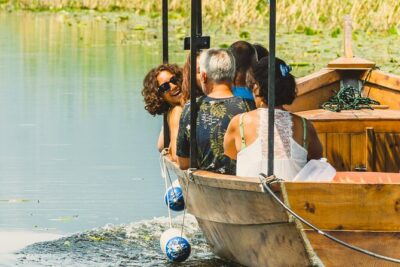
Skadar Lake National Park: Guided Boat Tour to Kom Monastery
Read our review →
Skadar Lake National Park: Guided Boat Tour with Wooden Boat
Read our review →
Tivat/Kotor: Boka Bay Full-Day Guided Cruise with Swim Stop
Read our review →

1-Hour Guided Lipa Cave Adventure in Montenegro
Read our review →